
Poor sleep doesn’t just leave you feeling tired the next morning. It can change how you feel, think and react throughout the day. You might become impatient, forget little things or feel upset over situations that normally wouldn’t bother you.
At first, you may blame a busy schedule, too much work or personal worries. But when these feelings keep coming back, your sleeping habits might be part of the reason. After all, your brain needs proper rest just as much as your body does.
Think about how different your day feels after a genuinely good night’s sleep. You can concentrate better, handle small problems without getting frustrated and feel more comfortable dealing with people. Now compare that with a morning after barely sleeping. Even simple responsibilities can feel exhausting.
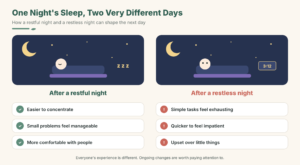
That’s because your brain uses sleep to process information, organize memories and manage emotions. When you don’t get enough quality rest, these processes can become harder. And sometimes, the effects show up in your mood and behaviour before you even realise your sleep is suffering.
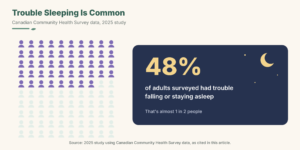
There’s another side to this connection, too. Stress, anxiety and low mood can make falling asleep difficult, while poor sleep can make these feelings harder to manage. A 2025 study using Canadian Community Health Survey data found that 48% of adults surveyed had trouble falling or staying asleep. So, why does sleep have such a strong connection with our emotional health?
What Is the Connection Between Sleep and Mental Health?
Sleep and mental health are closely connected because your brain needs enough rest to process information, store memories and manage emotions. Without proper sleep, you may find it harder to concentrate, control your reactions and deal with everyday situations calmly.
Your brain doesn’t simply switch off when you fall asleep. It continues working behind the scenes. sorting through experiences, organising memories and processing emotions from the day. This work happens during different sleep stages, particularly deep sleep and REM sleep.
Both stages have their own roles. Deep sleep supports recovery, while REM sleep, the stage linked with vivid dreams, helps your brain process memories and emotional experiences. Together, they support learning and help you make sense of things that happened during the day.
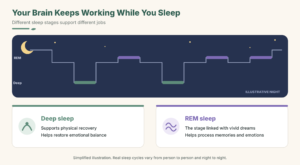
A 2025 review of sleep and emotion research from the University of York explains that losing sleep can make people more emotionally reactive. It can also make controlling those reactions harder and negative feelings last longer. Both deep and REM sleep appear to help restore emotional balance.
You may notice this connection in ordinary situations. Someone makes an unexpected comment, your plans change or a small problem comes up at work. and suddenly, your reaction feels much stronger than usual. Poor sleep can make managing these emotional responses more difficult.
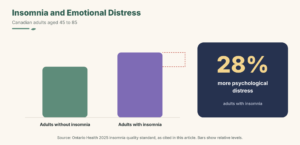
Ontario Health’s 2025 quality standard on insomnia highlights another important connection. Canadian data showed that adults aged 45 to 85 with insomnia reported 28% more psychological distress than those without insomnia. This is another reason why restful sleep matters for your mental well-being.
What Are the Common Signs of Poor Sleep?
Poor sleep can affect your nighttime routine, daytime energy, concentration and mood. Sometimes, the problem is obvious because you spend hours trying to fall asleep. Other times, you only notice that you’re unusually tired, distracted or frustrated throughout the day.
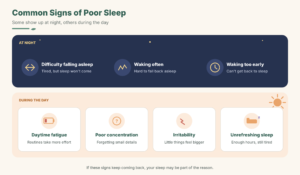
You might not immediately connect these changes with your sleeping habits. but paying attention to them can help you understand what’s happening. Some common signs include:
- Difficulty Falling Asleep: You’re tired and ready for bed, but you keep turning from one side to another because sleep just won’t come.
- Frequent Nighttime Waking: You wake up several times during the night and struggle to fall asleep again, even though you still feel tired.
- Early Morning Waking: You open your eyes much earlier than planned and cannot get back to sleep, no matter how much you want to.
- Daytime Fatigue: You feel exhausted throughout the day, and even your usual morning routine or afternoon responsibilities take more effort.
- Poor Concentration: You find yourself forgetting small details, losing track of conversations or struggling to finish tasks that normally feel simple.
- Irritability: Little things start getting on your nerves, and you feel more frustrated, sensitive or moody than usual.
- Unrefreshing Sleep: You spend enough time in bed but still wake up feeling tired, almost as if you haven’t rested properly.
Why Can Lack of Sleep Affect Brain Function?
Lack of sleep affects brain function because your brain needs proper rest to process information, remember things and stay focused. When you regularly miss out on quality sleep, activities that require attention, memory and decision-making can become harder.
You may have experienced this without giving it much thought. Perhaps you read the same paragraph several times because nothing seems to register. or forget what you were about to do after walking into another room. These little moments can become more common when you’re sleep-deprived.
During sleep, your brain organises the day’s experiences and helps move important information into long-term memory. Both deep sleep and REM sleep support this process. When your sleep gets interrupted, learning new things and remembering details can become more difficult.
A 2025 review of sleep research in Cureus explains that the prefrontal cortex, the area behind your forehead, is especially sensitive to sleep loss. This part of your brain helps you concentrate, plan activities, solve problems and make everyday decisions.
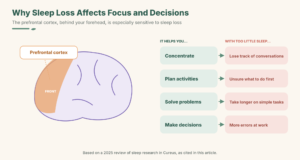
When you’re running on very little sleep, these abilities may not work as smoothly. You might lose track of conversations, forget instructions or take longer to make simple decisions. Even choosing which task to complete first can feel like a bigger challenge than usual.
The same research connects ongoing sleep loss with higher error rates and lower productivity at work. You may spend longer completing ordinary tasks, overlook important details or struggle to stay organised. When these problems keep happening, even a normal working day can become mentally exhausting.
What Is the Relationship Between Poor Sleep, Stress, and Anxiety?
Poor sleep can make stress and anxiety harder to manage because your brain becomes more sensitive to everyday pressure. Things you normally handle without much trouble may suddenly feel overwhelming. You might become frustrated quickly, worry more than usual or struggle to relax.
Research also supports this connection. A 2024 meta-analysis in Psychological Bulletin brought together findings from more than 50 years of sleep experiments. It found that different types of sleep loss, including all-nighters and interrupted sleep, increased anxiety symptoms.
But there’s something else worth understanding. stress and anxiety can also disturb your sleep. You might go to bed feeling completely exhausted, yet your mind keeps returning to unfinished work, personal worries or something that happened earlier during the day.
One thought leads to another, and suddenly you’re thinking about tomorrow’s responsibilities instead of getting some rest. You may notice physical tension, a faster heartbeat or difficulty relaxing. Even when you finally fall asleep, your rest may be lighter and easier to interrupt.
Our post on why anxiety can cause physical symptoms explains how emotional stress can affect the body. These physical changes can make it even harder to settle down when you’re already struggling with sleep.
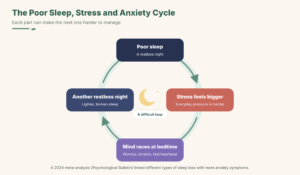
This is how poor sleep, stress and anxiety can turn into a difficult cycle. Poor sleep makes stress harder to handle, stress keeps your mind active at bedtime, and another restless night follows. making the whole situation harder to manage.
How Can Poor Sleep Influence Depression and Mood Changes?
Poor sleep can affect your mood, motivation and emotional well-being, especially when sleeping difficulties continue for a long time. You might feel unusually sad, lose interest in activities you normally enjoy or find everyday responsibilities harder to manage.
There’s research behind this connection, too. Researchers at Université Laval in Quebec followed Canadian adults for five years and presented their findings at SLEEP 2024. They found that people whose insomnia symptoms continued or became worse had a higher risk of developing depression.
However, having trouble sleeping doesn’t automatically mean you have depression. Different factors can affect your sleep and emotional health, so it’s important not to jump to conclusions. A health professional can help assess what’s happening and whether other concerns may be involved.
Still, ongoing sleep problems can change how you feel throughout the day. You may notice that things you once enjoyed don’t feel the same anymore. or that everyday responsibilities take much more emotional energy than before.
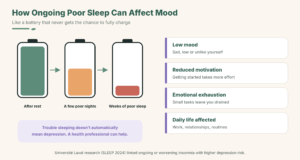
Some changes you might experience include:
- Low Mood: You may feel sad, emotionally low or unlike yourself, especially when poor sleep continues for several days.
- Reduced Motivation: Activities you normally enjoy or simple tasks on your to-do list may start feeling difficult. Even getting started can take more effort.
- Emotional Exhaustion: You may feel mentally drained, almost like your battery never gets the chance to charge fully. Small responsibilities can leave you feeling exhausted.
- Changes in Daily Functioning: Sleep and mood changes can affect your work, relationships and everyday routines, making normal responsibilities harder to manage.
Who Is More Likely to Experience Mental and Emotional Effects From Poor Sleep?
People experiencing ongoing stress, irregular working hours, demanding routines, existing mental health concerns or age-related sleep changes may be more likely to notice the effects of poor sleep. However, everyone’s experience is different. and the same sleep problem can affect people differently.
For some people, the problem starts with work or family responsibilities. Others may struggle because of changing sleep patterns or existing health concerns. Understanding these differences helps explain why certain groups may experience stronger mental and emotional effects:
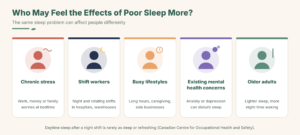
- People Experiencing Chronic Stress: Ongoing worries about work, money or personal responsibilities can make it difficult to relax at bedtime. Your mind may keep returning to the same problems, even when you’re physically exhausted. Our post on whether work pressure and burnout can lead to anxiety symptoms explores this connection.
- People With Irregular Work Schedules: Night shifts, rotating shifts and changing work hours can disturb your body’s natural sleep routine. This is common in hospital, warehouse and trucking jobs across Brampton and Peel. The Canadian Centre for Occupational Health and Safety explains that daytime sleep is rarely as deep or refreshing as sleep at night.
- People With Demanding Lifestyles: Long working hours, family responsibilities, caregiving and side businesses can leave very little time for proper rest. When your schedule becomes too busy, sleep is often the first thing you sacrifice to finish everything else.
- People With Existing Mental Health Concerns: People experiencing anxiety, depression and other mental health challenges may already struggle with sleep. Unfortunately, poor sleep can make these feelings harder to manage, creating a cycle that affects everyday life.
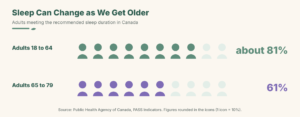
- People Experiencing Age-Related Sleep Changes: Sleep patterns can change as people get older. Sleep may become lighter, and waking up during the night can become more common. The Public Health Agency of Canada’s latest PASS Indicators show that 61% of adults aged 65 to 79 meet the recommended sleep duration, compared with about 81% of adults aged 18 to 64.
What Long-Term Effects Can Poor Sleep Have on Overall Well-Being?
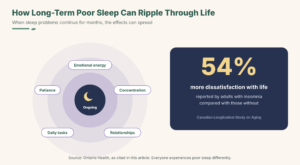
Long-term poor sleep can affect your emotional health, concentration, relationships and ability to manage everyday responsibilities. A few restless nights may leave you tired, but when sleeping problems continue for months, the effects can become harder to ignore.
You might notice that situations you once handled comfortably now feel overwhelming. A difficult conversation, unexpected expense or busy working day may leave you feeling completely drained. It’s not necessarily that your responsibilities have changed. you may simply have less emotional energy to deal with them.
The effects can also reach your relationships. When you’re constantly tired, you may become less patient with family, friends or colleagues. Concentrating at work can become harder, and everyday conversations may feel more exhausting than they normally would.
Ontario Health highlights that adults with insomnia in the Canadian Longitudinal Study on Aging reported 54% more dissatisfaction with life than those without insomnia. This shows that ongoing sleep problems can affect how people feel about their overall lives, not just how rested they feel.
Of course, everyone experiences poor sleep differently. A few months of interrupted sleep while caring for a new baby aren’t the same as years of insomnia alongside a demanding job. Your overall health, daily routine and personal circumstances also matter.
What matters is not ignoring the problem when it continues. Paying attention to your sleep early can help you understand what’s affecting your rest and find suitable support. You don’t have to wait until tiredness and emotional stress start interfering with almost everything you do.
How Can You Improve Sleep Quality and Support Emotional Well-Being?
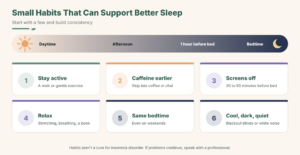
Improving sleep quality often starts with small changes to your everyday routine. Going to bed at a regular time, reducing screen use and making your bedroom more comfortable can help support better rest. These habits aren’t a cure for every sleep problem. but they’re a useful starting point.
It’s also important to understand that healthy sleep habits cannot always solve ongoing insomnia. Ontario Health explains that good sleep habits alone aren’t an effective treatment for insomnia disorder. If sleep difficulties or emotional symptoms continue, professional support may help you understand what’s happening.
You don’t need to change your entire routine overnight. Start with a few manageable habits and see what works for you. consistency matters more than trying to do everything perfectly.
- Maintain a Consistent Sleep Schedule: Try going to bed and waking up around the same time every day, even on weekends. A regular routine helps your body know when it’s time to sleep and wake up.
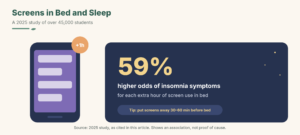
- Limit Screen Exposure Before Bedtime: Scrolling through your phone or watching videos in bed can keep you awake longer. Try putting screens away 30 to 60 minutes before bedtime. A 2025 study of over 45,000 students linked each extra hour of screen use in bed to 59% higher odds of insomnia symptoms.
- Reduce Late Caffeine Intake: That afternoon coffee or evening chai might be affecting your sleep more than you realise. If you notice this happening, try having caffeinated drinks earlier in the day instead of close to bedtime.
- Create a Comfortable Sleep Environment: Your bedroom should feel comfortable enough to help you relax. Keeping it cool, dark and quiet may help. Blackout blinds, a fan or a white-noise app can also make your sleeping space more comfortable.
- Stay Physically Active: You don’t need an intense workout every day to stay active. Walking, cycling or doing some gentle exercise can support your overall health. The Public Health Agency of Canada also lists better sleep quality among the benefits of regular physical activity.
- Practice Relaxation Techniques: If your mind feels busy before bedtime, give yourself a little time to slow down. Gentle stretching, slow breathing, meditation or reading a book can help you relax before going to sleep.
Take the First Step Toward Better Sleep and Emotional Well-Being
Taking care of your sleep matters when restless nights start affecting your mood, concentration or everyday life. It’s easy to keep putting the problem aside because of work, family and other responsibilities. but ongoing sleep difficulties deserve attention.
You might tell yourself that things will improve once life becomes less busy. Sometimes they do, but repeated sleep problems can have several causes. Understanding what’s keeping you awake is a better starting point than simply accepting tiredness as part of your routine.
Stress, anxiety, low mood or an underlying health concern may all contribute to sleep difficulties. Speaking with a professional can help you explore these factors and understand what kind of support may be suitable for your situation.
At Soul Homeopathy in Brampton, a homeopath licensed with the College of Homeopaths of Ontario, offers individual consultations. These consultations consider your sleep, stress and emotional well-being together, giving you an opportunity to discuss the concerns affecting your daily life.
You don’t have to accept sleepless nights as something you’ll simply have to live with. If poor sleep is affecting your mood, concentration or everyday life, take the time to understand what’s happening. Explore our services or book a consultation to discuss your concerns.
Frequently Asked Questions (FAQs)
Q1. Can poor sleep make anxiety worse?
Yes. poor sleep can make everyday worries feel harder to manage. Anxiety can also keep your mind active at bedtime, making it difficult to fall asleep the following night.
Q2. Can lack of sleep contribute to depression?
It can be linked with a higher risk of depressive symptoms, especially when sleep problems continue. However, poor sleep doesn’t automatically mean you have depression. A health professional can help assess your symptoms.
Q3. How many hours of sleep do adults need for good mental health?
Canada’s 24-Hour Movement Guidelines recommend 7 to 9 hours of good-quality sleep for adults aged 18 to 64, and 7 to 8 hours for adults aged 65 and older.
Q4. When should you seek professional help for ongoing sleep problems?
Consider speaking with a professional if sleep problems continue for more than a few weeks or start affecting your mood, concentration or daily routine. Getting support can help you understand what’s behind your sleep difficulties.